
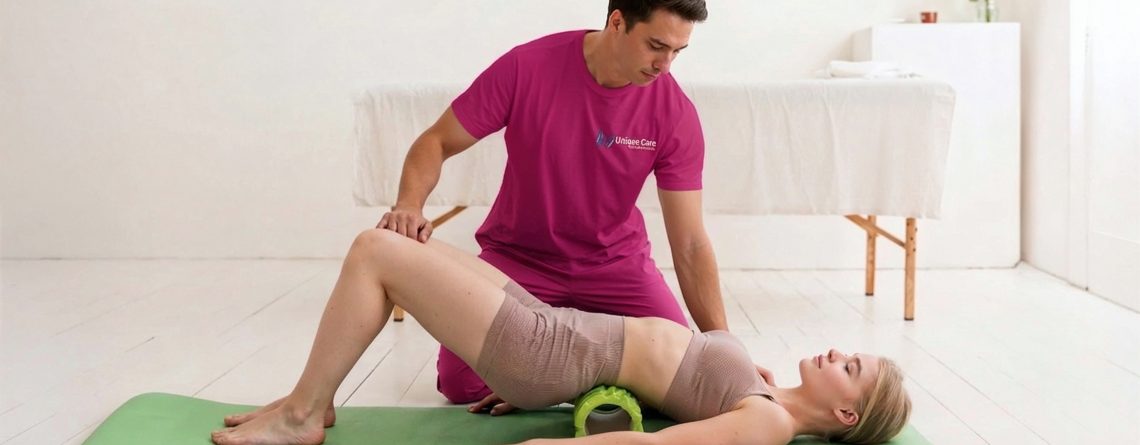
Pelvic Floor Exercises for Women
Why Pelvic Floor Health Matters at Every Stage of Life Leaking when you cough or exercise may be common - but that does not mean women simply have to accept it. Pregnancy, childbirth, aging, hormonal changes, surgery, and other factors can affect the muscles responsible for supporting the pelvic region. Pelvic floor physical therapy can help women better understand and address these changes. At Unique Care, we believe women's health rehabilitation should be individualized, private, respectful, and focused on helping women return to the activities that matter to them.
Do Pelvic Floor Exercises Actually Work?
For urinary incontinence, the evidence is substantial. A Cochrane systematic review found pelvic floor muscle training to be effective for women with several forms of urinary incontinence and supported its use as a first-line conservative treatment. But there is an important detail: pelvic floor rehabilitation is not simply "do more Kegels."
Why Kegels Are Not the Answer for Every Woman
Some women need strengthening. Others may have pelvic floor muscles that are overactive, painful, or poorly coordinated.Simply prescribing more contractions without evaluating the problem may therefore be inappropriate. At Unique Care, the goal is to understand how your pelvic floor is functioning, not just whether the muscles are "weak."
The Unique Care Approach to Women's Health
We view the pelvic floor as part of a larger movement system. A physical therapy assessment may consider pelvic floor muscle function, breathing mechanics, core strength, hip strength, posture, movement patterns,functional activities, and exercise demands. Treatment may involve pelvic floor muscle training, breathing strategies, core and hip strengthening,education, movement retraining, and a personalized home program.


Leave a Reply